
APNEC & APNEC Digital – Multi Language Article
ایپنک اور ایپنک ڈیجیٹل — پاکستان کی سب سے بڑی میڈیا ورکرز کنفیڈریشن
ایپنک پاکستان بھر کے پرنٹ، الیکٹرانک اور ڈیجیٹل میڈیا ورکرز کی قومی نمائندہ تنظیم ہے…
ايپنڪ ۽ ايپنڪ ڊجيٽل — پاڪستان جي سڀ کان وڏي ميڊيا ورڪرز تنظيم
ايپنڪ پاڪستان جي اخبار، اليڪٽرانڪ ۽ ڊجيٽل ميڊيا ورڪرز جي نمائندگي ڪندڙ مرڪزي تنظيمي پليٽ فارم آهي…
ایپنک تے ایپنک ڈیجیٹل — پاکستان دی سب توں وڈی میڈیا ورکرز کنفیڈریشن
ایپنک پاکستان دے اخبار، ٹی وی تے ڈیجیٹل میڈیا ورکرز نوں اک پلیٹ فارم تلے متحد کرن والی مرکزی تنظیم ہے…
ایپنک او ایپنک ډیجیټل — د پاکستان تر ټولو ستره د میډیا کارکوونکو کنفېډرېشن
ایپنک د پاکستان د چاپېریال، برېښنايي او ډیجیټل میډیا کارکوونکو ګډ ملي غږ دی…
APNEC & APNEC Digital — A Comprehensive Overview of Pakistan’s Leading Media Workers Confederation
The All Pakistan Newspapers & Electronic Media Employees Confederation (APNEC), today recognized widely alongside its expanding wing APNEC Digital, stands as the largest and most influential representative body of media workers in Pakistan. Since its establishment in 1974, APNEC has played a defining role in shaping the rights movement of print, electronic, and now digital media professionals across the country.
Over the decades, the confederation has remained at the forefront of campaigns for fair wages, job security, improved working conditions, and the protection of press freedom — while evolving consistently to meet the demands of a rapidly changing media landscape.
Historical Foundation: The Birth of APNEC in 1974
APNEC emerged during a turbulent period in Pakistan’s journalistic history. The 1960s and 1970s were marked by:
- State pressure and censorship
- Low wages and inconsistent pay structures
- Unfair dismissals
- Weak enforcement of labor laws
- Fragmented city-level unions with no national voice
In response, several newspaper workers’ unions joined hands to establish a unified national platform — All Pakistan Newspaper Employees Confederation (APNEC). With time, as the media industry expanded, the organization broadened its scope to incorporate electronic and digital media workers, eventually evolving into the comprehensive national confederation known today.
APNEC’s Expanded Role: Inclusion of Electronic & Digital Media
The media revolution of the 2000s — marked by the rise of 24/7 news channels, modern broadcast technologies, and digital journalism — significantly reshaped Pakistan’s information ecosystem. APNEC responded with vision and commitment, integrating:
- Electronic media staff
- Reporters
- Technical and engineering teams
- MCR & PCR professionals
- Cameramen and field technicians
- Digital journalists
- Social media desk professionals
This expansion culminated in the formation of APNEC Digital, a dedicated wing aimed at addressing the emerging challenges and rights of the digital media workforce. APNEC Digital today plays a critical role in advocating legal protections, proper job contracts, and formal recognition for digital media employees who often operate outside traditional labor structures.
Mission & Core Objectives of APNEC and APNEC Digital
APNEC’s mission is rooted in securing the foundational rights of media workers across Pakistan. Key objectives include:
1. Fair and Consistent Wages
Ensuring the implementation of government-mandated wage boards and advocating for equitable salary structures across all media houses.
2. Job Security & Legal Protection
Safeguarding employees against illegal terminations and contractual exploitation.
3. Improved Working Conditions
Promoting safe, professional, and ethical environments for newsroom and field workers.
4. Enforcement of Labor Laws
Pursuing legal remedies and policy initiatives that protect workers’ rights at provincial and federal levels.
5. Freedom of the Press
Defending the independence of journalism and resisting state or corporate barriers to free expression.
6. Organizational Strengthening
Supporting local unions, strengthening the national network, and training young media workers.
7. Representation of Digital Media
Through APNEC Digital, ensuring digital journalists receive the same rights, recognition, and protections as traditional media workers.
Leadership & Organizational Structure
APNEC operates through a comprehensive and democratic structure. It includes:
- Central Chairman
- Central Secretary General
- Senior & Vice Chairpersons
- Provincial and Divisional Leadership
- Women’s Wing
- Finance, Information & Coordination Secretaries
- APNEC Digital Committees
Current Central Leadership (2025–2027)
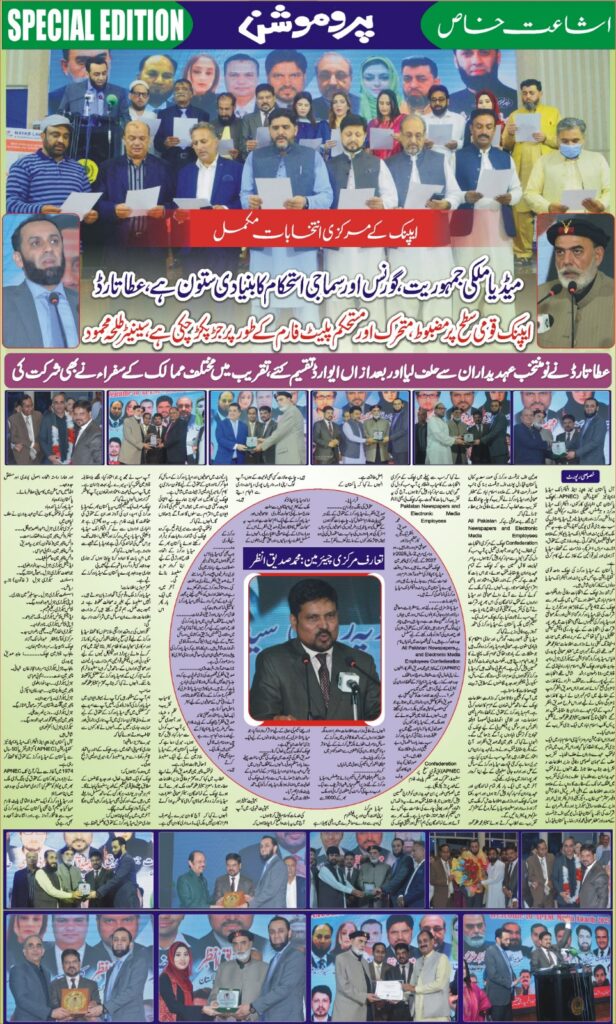
Central Chairman: Muhammad Sadiq Anzer
A respected labor leader known for his organizational strength, long-term vision, and successful policy advocacy. Under his leadership, APNEC achieved remarkable milestones, including:
- Securing Rs. 1 billion health insurance package for journalists and media workers
- Providing free medical treatment to over 5,000 workers nationwide
- Advancing long-pending wage, dues, and employment matters
Central Secretary General: Abdul Samad Mengal
A dynamic voice for workers’ rights with strong representation from Balochistan.
Provincial Structure
APNEC’s influence spans all provinces and regions of Pakistan, with elected leadership heading:
- Punjab
- Sindh
- Balochistan
- Khyber Pakhtunkhwa
- Gilgit-Baltistan
This countrywide network ensures effective coordination and representation at the grassroots level.
APNEC’s 50-Year Legacy: Key Achievements (1974–2024)
1. Wage Board Awards
APNEC has played a decisive role in pushing for the implementation of successive Wage Board Awards — a historic legal mechanism that ensures fair compensation for media employees.
2. Resistance to Illegal Dismissals
Through protests, negotiations, and legal battles, APNEC has repeatedly protected workers from arbitrary layoffs.
3. National Movements for Press Freedom
APNEC has partnered with PFUJ and other bodies to resist censorship and uphold constitutional freedoms.
4. Organizational Expansion
From a union of print workers to a national confederation representing all forms of media.
5. Successful Protests & Negotiations
From newsroom strikes to national demonstrations, APNEC has forced policy reforms and compelled media houses to honor legal obligations.
6. Recognition by Global Institutions
International media rights organizations, including IFJ and FIDH, acknowledge APNEC as a legitimate and active stakeholder in labor rights advocacy.
APNEC Digital — The Future of Media Labor Rights
As journalism transitions rapidly to digital platforms, APNEC Digital is emerging as a crucial protector of online journalists, video content creators, fact-checkers, and newsroom digital staff.
It focuses on:
- Contractual recognition of digital workers
- Protection against online harassment
- Legal safeguards for online reporting
- Training and upskilling in modern digital journalism
- Fair salary structures for social media teams
- Regularization of freelance and hybrid newsroom roles
In an era where digital journalism shapes national opinion, APNEC Digital ensures that digital professionals receive the same respect, protection, and benefits as traditional journalists.
Conclusion
For more than five decades, APNEC and APNEC Digital have symbolized the collective strength of Pakistan’s media workforce. From the early struggles of newspaper employees to the modern challenges of digital journalism, the confederation has remained committed to justice, dignity, and professional rights for every media worker in the country.
With visionary leadership and an expanding national structure, APNEC continues to guide media workers toward a stronger, more secure, and more empowered future.